You’ve heard the saying, “Stress is the #1 killer.” Well, then, I’m asking all health care professionals as well as the offices and institutions that we work in to become aware of our internal states of and environmental spaces where stress, worry, anxiety, and fear live and to replace those states with presence and tranquility despite the severity of the situation. If you live up to what you know I assure you your patients and clients will have more positive responses and outcomes. If you find this difficult and you see its effects on your patients and clients have the courage to give them my contact information. www.medicinevolution.com
Symptoms Aren’t Always Sickness
Last week I had the opportunity to work on someone suffering from an array of symptoms such as fever, body/joint pains, headache, and a stiff neck from sleeping wrong. The most pressing and debilitating complaint was the neck pain because it exacerbated everything else on every small movement.
This is where courage, experience, and listening (with my hands) come into play and prove valuable -sometimes beyond medicine.
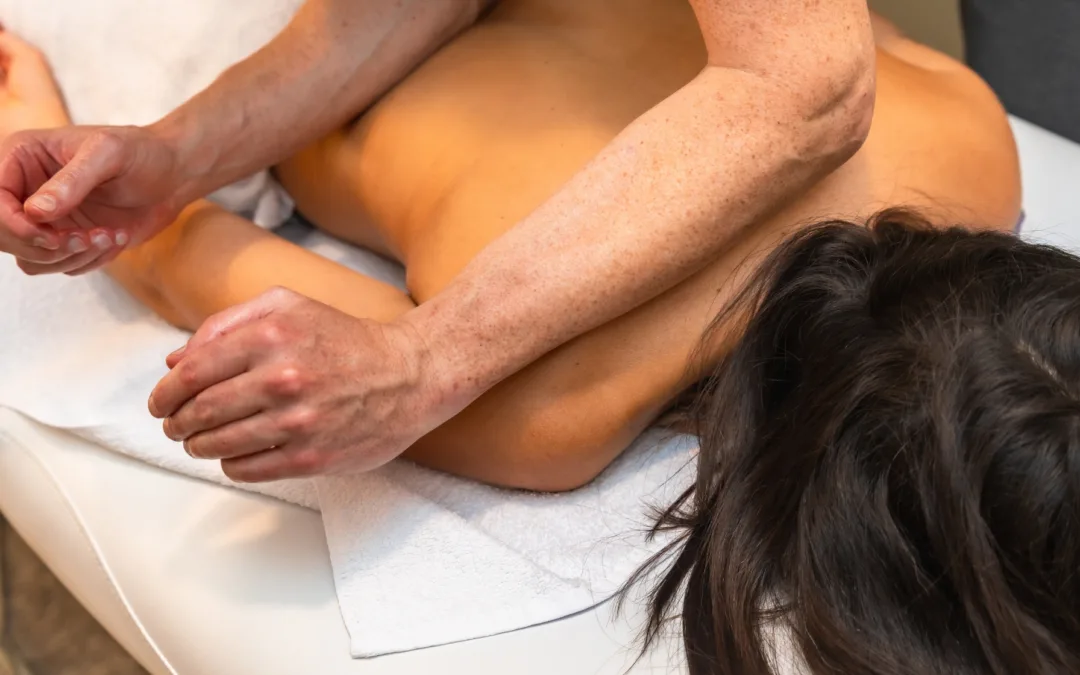
I began, like always, by touching and assessing the fluidity of the body or lack of it. Keeping mindful of the symptoms, but knowing they were simply the background of something closer, something more tangible. You see, the body will always express an imbalance on any level (physical, mental, emotional, etc.) as a symptom or a group of symptoms in the muscles and soft tissue. Why? Because symptoms are simply a pysical articulation o fsome inner imbalance. In my limited experience of 13 years, it is more frequent than not that symptoms stem from a structural imbalance(s) than from a viral or bacterial illness. It is sad that the treatment of such things isn’t referred more to people who do the type of work I do.
I didn’t touch the head or neck that session, even though at the end of the session those areas remained in pain. What I did do was go to where the body and my hands felt the most structural restrictions. Which happened to be the sacrum and low back, but my hands could tell this wasn’t simple. I worked right along the spine, in deep joint crevices of the sacro-illium, and around the mid-back where both head/neck and shoulders were not feeling connected to the lower spine and pelvis. In about 30 min I can tell by tissue changes whether or not I can help a person. Things were progressing well so I knew I needed to trust the work, my hands, and the healing potential of the body. By the end of the session movement was flowing as I rocked the hips I could see and feel movement through the spine move all the way up to the head. The ribcage was soft again, breathing more complete. I had to trust my clinical experience (backed that up with hundreds of years of knowledge passed from bodyworker to bodyworker through the ages) that the spine reflects itself vertebrae to vertebrae, the top most reflecting the bottom most, the base of the skull reflecting the sacrum – I left him in expert care.
I went for a second session the next day. I went with an open mind but I admit I was slightly haunted with thoughts that I would have to do direct work on the neck. So much was better, the symptoms were gone or at least very, very bearable. The suffering was gone from an observer’s view and that was expressed subjectively. When clients are suffering and tests fail to confirm than get under the scrupulous knowledge of expert hands. Hands which know they are not perfect and will quickly and humbly bow out of any situation too much to bear.
I am thankful for my teachers, I am thankful for those who have the courage to take a different almost untrodden path, I do hope that people out there read this and come to structural bodyworkers like myself. If you aren’t in my area I will try my best to connect you with someone who maybe qualified closer to you. I was on the other side of the table years ago, this gave me my life back and I truly believe that others need this opportunity. Cutting people off from this type of work is oppression, it is selfish, it is insane.
“Talk with your provider about alternatives to opioid painkillers.”
CDC director: We can reduce prescription drug overdoses
Thirty years ago, I attended medical school in New York. In the key lecture on pain management, the professor told us confidently that patients who received prescription narcotics for pain would not become addicted.
While pain management remains an essential patient right, a generation of health care professionals, patients, and families have learned the hard way how deeply misguided that assertion was. Narcotics – both illegal and legal – are dangerous drugs that can destroy lives and communities.
Millions of Americans struggle with substance abuse. Across the United States, overdoses involving opioid painkillers – a class of drugs with narcotic effects that includes hydrocodone, methadone, oxycodone – have skyrocketed in the past decade.
Today, the United States consumes most of the world’s supply of opioid painkillers. By 2010, enough opioid painkillers were prescribed to medicate every American adult around-the-clock for a month. And every year, nearly 15,000 people die from overdoses involving these drugs… more than from heroin and cocaine combined.
Studies by scientists at the Centers for Disease Control and Prevention and elsewhere show that most of these deaths are not the result of people taking small doses of opioids for a short time. Typically, problems arise when people take large amounts of painkillers or use them over a long period of time.
About 1 in 20 people in the United States age 12 or older reported using opioid painkillers for non-medical purposes in 2010. Some of these people engage in doctor shopping – getting prescriptions for commonly abused drugs from several practitioners in a short time and having the prescriptions filled at several pharmacies. In this way, people can obtain dangerous amounts of a prescription drug rapidly.
And in addition to the heavy toll this can take on lives and communities, non-medical use of prescription painkillers costs health insurers up to $72.5 billion annually in direct health care costs.
We can do more as a society to help prevent overdoses involving prescription painkillers while making sure patients who need them have access to safe, effective treatment.
Health care providers should prescribe opioid painkillers only under specific conditions, as in the treatment of chronic cancer pain when other treatments have not worked, and in limited quantities.
Providers can also screen patients for risk and history of substance abuse before prescribing opioid painkillers. Drug addiction is a disease of the brain that can be treated.
But health care providers aren’t the whole answer. Insurers and health care institutions must set up systems to identify and take action when providers or patients are using prescription drugs in dangerous ways. Some states have passed laws to rein in rogue pain clinics (“pill mills”) run solely for profit, that attract drug shoppers from other states.
Individuals can help protect themselves and others by doing the following:
– Talk with your provider about alternatives to opioid painkillers.
– Use opioid painkillers only as directed by a health care provider.
– Make sure you are the only one to use your painkillers. Not selling or sharing them with others helps prevent misuse and abuse.
– Store opioid painkillers in a secure place and dispose of them properly.
View this articles comments:
http://thechart.blogs.cnn.com/2012/02/24/cdc-director-we-are-not-powerless-against-prescription-drug-overdoses/?hpt=he_c2
Relieving Neck Pain
Come out of habit patterns that contribute to pain with exercises that cause length, connection, and re-integration.
The Sophisticated Spine, What Areas Are Often Missed In Treating Back Pain?
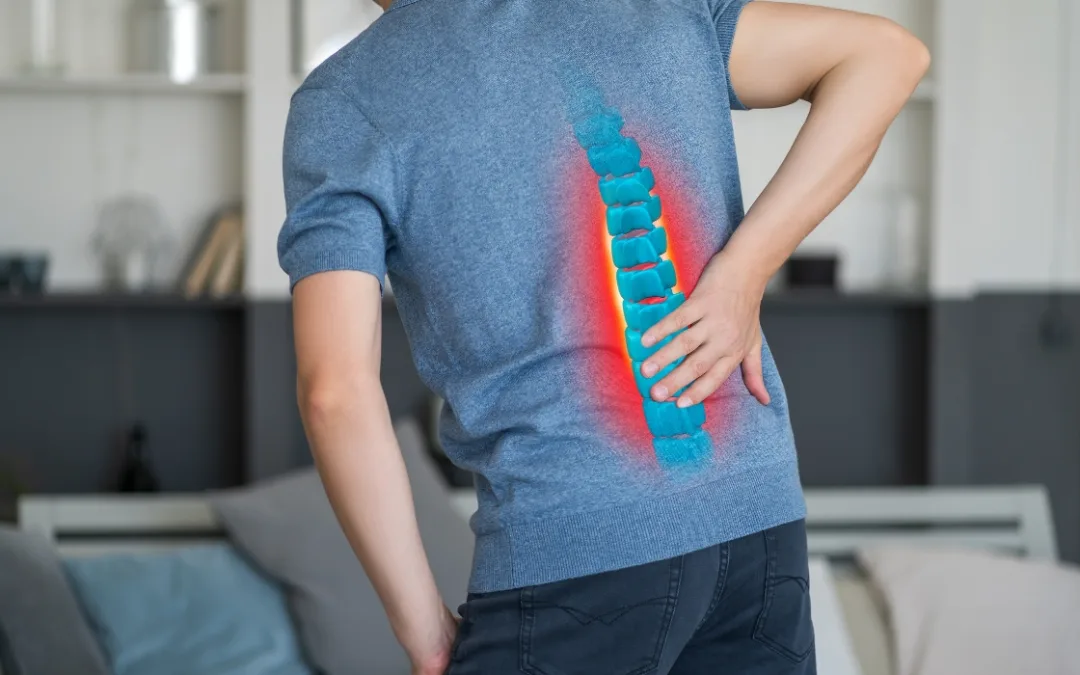
Do you have chronic back pain or has your back ever suddenly seized up for no apparent reason? If it has you’ve most likely experienced sharp pain or pain concentrated in one area. What we feel and experience and what the reality of the issue is can be very different. In this post I want to focus on some anatomical relationships surrounding the spine which get little attention, but are likely contributors to the pain.
Back pain can be sort of mysterious. We’ve created popular, but largely ineffective sayings for addressing back pain, and many have become cliche. You may have heard, “Strengthen your abs,” “Strengthen your back,” or “Stretch your hamstrings.” You might have said, “I need a massage” or you may have heard therapists point out, “There are knots in your back and you’re muscles are tense.” Simple solutions such as these inspire hope, but they fizzle out as ineffective attempts. If these solutions were effective and back issues were simple back pain wouldn’t be one of the most common medical complaints. Usually back pain is a complex and dynamic problem, and to add to that the origins of each person’s pain may be very different. It is a given that the area in pain should be treated, the soft tissues should be eased and brought back to a more fluid state. Treating the area directly is certainly protocol – when contraindications are not present – but, there’s more than that. Part of what contributes to the pain is remaining mentally fixated on localized treatment. Let’s let go of our culture of “cliche solutions.” Thinking outside of the box means thinking outside of the spine.
Structural Integration presents a global perspective of the body; and when understanding the spine the dynamics of local and distant anatomical landmarks such as the ribs, shoulders, and the sternum (in the chest) are seen as directly related.
The ribs and sternum are important aspects of the spine which many clients and professionals often overlook during treatment. The sides and front of the body have a direct affect on long term results. Maybe even more enlightening is that giving freedom to these adjacent structures can also contribute to decrease possible future susceptibility of acute and chronic pain.
When back muscles becomes rigid and spinal resilience is compromised the entire thoracic trunk is affected and all the structures from one extent to another freeze. When a vertebrae or a section of the spine is affected it is effected three-dimensionally, meaning to treat back pain thoroughly it is also neccessary to restore fluidity in the front (sternum), top and bottom (neck and shoulder blade), side to side (ribs) and through the body because the body is not hollow – it is three dimensionally connected. The soft tissues i.e., muscles, fascia, tendons, and ligaments on the very front of the spine (behind the organs) need to become fluid again for long term relief. This concept is foundational, but unique to Structural Integration, good practitioners can affect change at this level.